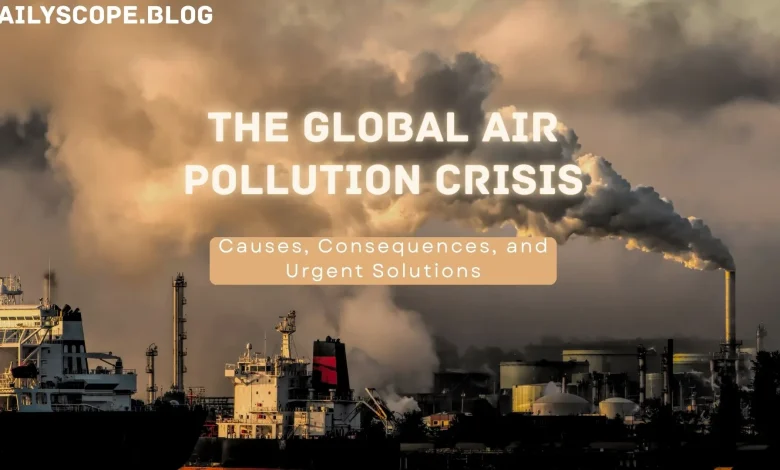
Author: Hussain Ali
Website: Dailyscope.blog
Introduction: Global Air Pollution Crisis
Air is the most essential resource for human survival. Every person breathes about 20,000 times a day, yet most people rarely think about the quality of the air they inhale. In the modern world, however, air pollution has become one of the most serious global environmental crises.
Across the planet, from large industrial cities to small rural communities, air pollution is affecting the health of millions of people. According to global health experts, air pollution is responsible for millions of premature deaths every year. Toxic gases, smoke, and microscopic particles are now present in the air of many countries, making clean air increasingly rare.
The global air pollution crisis is not just an environmental problem. It is also a health issue, an economic challenge, and a threat to the future of our planet. From respiratory diseases to climate change, the consequences of polluted air are widespread and dangerous.
This article explores the major causes of air pollution, its serious consequences, and the urgent solutions needed to protect the planet and human health. Global Air Pollution Crisis
Understanding Air Pollution
Air pollution occurs when harmful substances enter the atmosphere and damage the natural balance of the air. These substances may include gases, chemicals, dust, smoke, and microscopic particles.
Some of the most common air pollutants include:
• Carbon monoxide
• Nitrogen oxides
• Sulfur dioxide
• Ozone
• Particulate matter (PM2.5 and PM10)
• Volatile organic compounds
These pollutants come from various human activities such as transportation, factories, energy production, and burning fuels.
Air pollution can exist both indoors and outdoors, and both forms can have serious effects on human health. Global Air Pollution Crisis
The Major Causes of the Global Air Pollution Crisis
Understanding the causes of air pollution is essential to solving the problem. Several major factors are responsible for the increasing pollution levels worldwide.
1. Industrial Emissions
Industries are one of the largest contributors to global air pollution. Factories release large amounts of harmful gases and chemicals into the atmosphere during manufacturing processes.
Industries such as:
• Steel production
• Cement manufacturing
• Chemical factories
• Oil refineries
• Power plants
These industries often burn fossil fuels like coal, oil, and gas, releasing large quantities of pollutants.
In many developing countries, weak environmental regulations allow factories to release pollution without strict control. Global Air Pollution Crisis
2. Vehicle Emissions
Transportation is another major source of air pollution. Cars, trucks, buses, and motorcycles burn fuel that releases harmful gases.
Vehicle emissions produce:
• Carbon dioxide
• Nitrogen oxides
• Carbon monoxide
• Fine particulate matter
3. Burning Fossil Fuels
Fossil fuels remain the primary source of global energy. Coal, oil, and natural gas power electricity generation, transportation, and industry.
When fossil fuels burn, they release harmful pollutants into the air.
Coal-burning power plants are particularly damaging because they produce high levels of sulfur dioxide and particulate matter.
Countries that rely heavily on fossil fuels for electricity face greater air pollution challenges. Global Air Pollution Crisis
4. Agricultural Activities
Agriculture also contributes to air pollution. Farmers often burn crop waste after harvesting, releasing smoke and harmful particles into the air. Global Air Pollution Crisis
Other agricultural sources include:
• Fertilizers releasing ammonia
• Livestock producing methane gas
5. Household Pollution
Indoor air pollution is another serious issue, especially in developing regions.
Many households still use traditional fuels such as:
• Wood
• Coal
• Charcoal
These fuels are often burned in poorly ventilated spaces for cooking or heating. As a result, indoor air becomes highly polluted. Global Air Pollution Crisis
6. Deforestation
Trees naturally help purify the air by absorbing carbon dioxide and producing oxygen. However, widespread deforestation reduces this natural air filtration system.
• Air pollution increases
• Carbon emissions rise
• Climate change accelerate
The Consequences of Air Pollution
Air pollution has serious effects on human health, the environment, and the global economy. Global Air Pollution Crisis
Health Impacts of Air Pollution
The most immediate impact of polluted air is on human health.
People exposed to polluted air may develop:
• Asthma
• Bronchitis
• Lung cancer
• Heart disease
• Stroke
Environmental Damage
Air pollution does not only harm humans; it also damages the natural environment.
Major environmental consequences include:
• Acid rain
• Water pollution
• Damage to crops and forest
Air pollution also affects plant growth, reducing agricultural productivity. Global Air Pollution Crisis
Climate Change
Air pollution and climate change are closely connected.
Greenhouse gases such as carbon dioxide and methane trap heat in the Earth’s atmosphere.
• Heat waves
• Droughts
• Floods
Economic Consequences
The global air pollution crisis also has major economic impacts. Global Air Pollution Crisis
• Healthcare costs
• Reduced worker productivity
• Crop damage
• Environmental clean up
Air Pollution in Major Cities
Large cities around the world face severe air pollution problems.
Urban areas experience higher pollution because of:
• Heavy traffic
• Industrial activities
• Construction dust
• Population density
Many cities now regularly record dangerous air quality levels.
Residents in polluted cities often wear masks or avoid outdoor activities.
Improving urban air quality has become a major challenge for governments.
The Role of Government Policies
Government policies play a crucial role in controlling air pollution.
Strong environmental regulations can significantly reduce emissions from industries and vehicles.
Some important policy measures include:
• Emission standards for vehicles
• Clean energy policies
• Industrial pollution control
• Environmental monitoring system
Renewable Energy Solutions
One of the most effective ways to reduce air pollution is transitioning to renewable energy. Global Air Pollution Crisis
• Solar power
• Wind energy
• Hydropower
• Geothermal energy
Electric Transportation
Electric vehicles are becoming an important solution to urban air pollution.
Unlike traditional vehicles, electric cars do not produce exhaust emissions.
• Reduced air pollution
• Improved urban air quality
Urban Planning and Green Cities
Cities can reduce pollution through better urban planning. Global Air Pollution Crisis
• Expanding public transportation
• Creating bike lanes
• Increasing green spaces
• Promoting sustainable buildings
Individual Actions to Reduce Air Pollution
While governments and industries play major roles, individuals can also help reduce air pollution.
• Using public transportation
• Conserving energy
• Planting trees
• Reducing waste
Small actions taken by millions of people can make a significant difference.
Public awareness is essential for encouraging environmentally responsible behavior.
Technological Innovations
Technology is playing an increasingly important role in combating air pollution.
New innovations include:
• Air purification systems
• Pollution monitoring sensors
• Carbon capture technology
• Cleaner industrial processes
Advanced technology can help industries reduce emissions and improve air quality.
Research and development will continue to produce new solutions for the global air pollution crisis.